
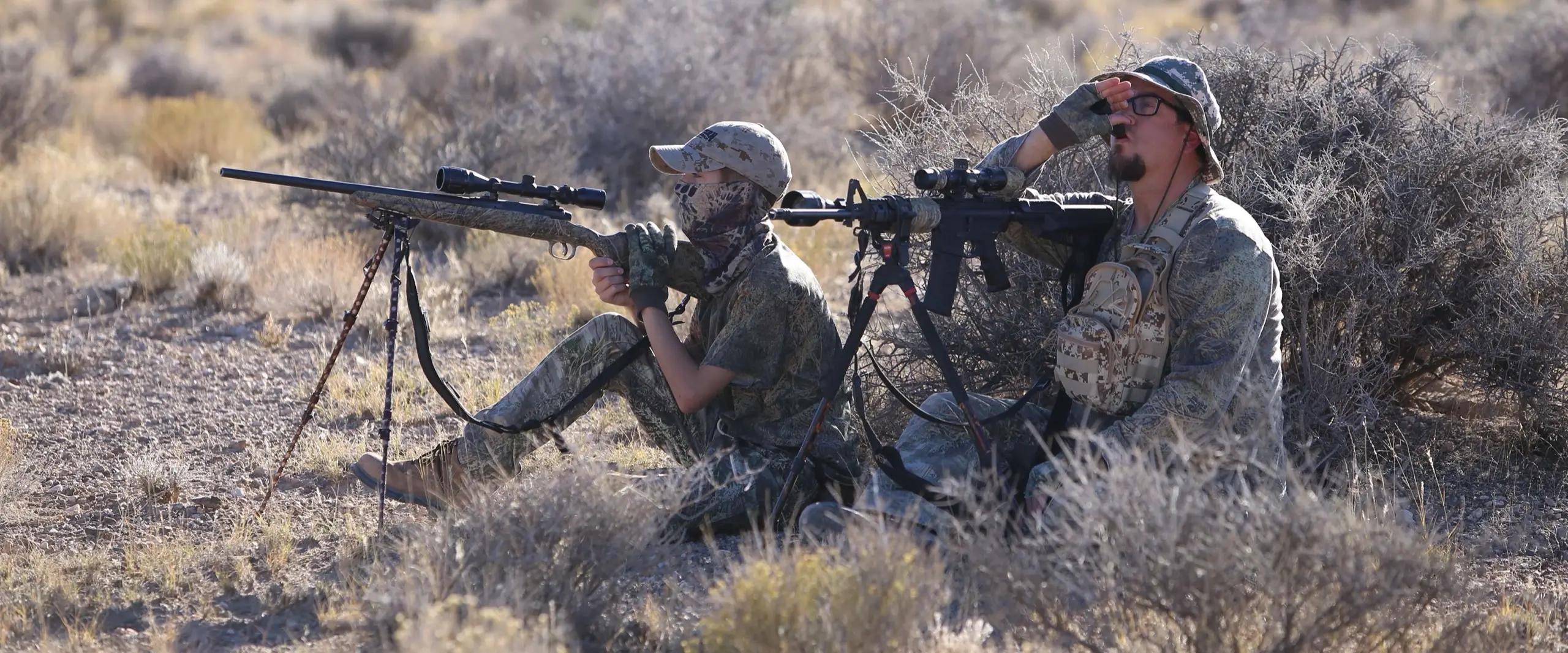
If you’re looking for an experience of a lifetime, calling coyotes in the vast open lands of the west is about as close as it gets. The sights, the sounds and the smells are addicting. For years I guided hunters through the areas below, and clients came away with an unparalleled learning experience in the art of calling predators — the ground out there is bucket list material, and hunters planned trips months ahead of time to hunt it.
Everything below describes how those hunts ran. Most of it is just as useful if you’re planning the trip yourself.
What a day of guided calling looked like
Hunters could expect to call between 3 and 10 coyotes in a full day of calling, with weather and other factors moving that around day to day. A day meant eight hours of calling and 12 to 15 stands.
You needed to be in good enough physical condition to walk up to 10 miles a day. It isn’t strenuous hiking, but the walking is what puts you in the best position for success. We hunted elevations from 4,000 to 8,000 feet above sea level — to keep from getting winded, I recommended at least three weeks of cardio before making the trip. That advice holds whether or not anyone is guiding you.
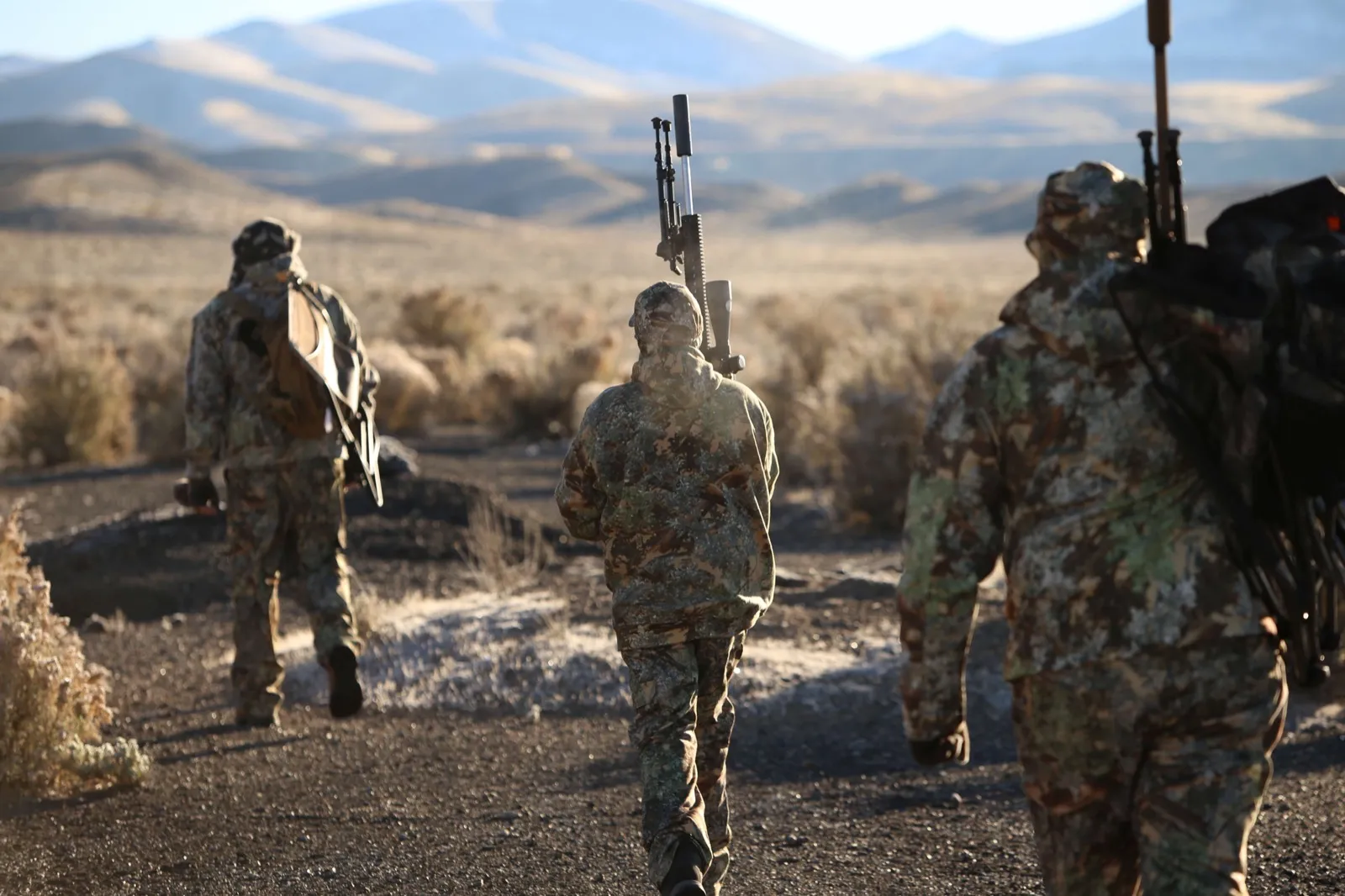
Every hunt started with a basic firearms safety check before we went into the field, and a zero test on every rifle before the first stand. Gun safety in the field is not negotiable, and it is your responsibility to have your equipment ready. We learned the hard way that you can’t hit coyotes when your zero is off by two feet.
With millions of acres of public land in the west, there was always more country to scout and more coyotes to locate. The effort of finding high-producing areas is most of the work, and it is what the results come from.
If you’ve never called a coyote up close, it’s an experience you won’t forget. These hunts were educational for rookie callers above all — most people went home with a serious foundation for coyote calling, and called more coyotes for years afterward. If you’re building that foundation on your own, how to call coyotes is the same material written down.
Where and when we hunted
Most trips were in Nevada. For gray fox or bobcat, Arizona was the better plan, and with the right conditions Wyoming worked well. We occasionally ran trips in southern Utah, but Arizona, Wyoming and Nevada are more desirable calling grounds.
Prime season was October through February. Coyote trips are ideal in the fall and early winter, while calling bobcats is best from December through the first of February, when prime fur is on.
Clients typically flew into Las Vegas, Nevada or Salt Lake City, Utah and drove a rental car to an agreed meeting point, 2–5 hours out. Arizona hunts were based out of Kanab, Utah.
Whichever of those states you hunt, check the rules before you go — season dates, night hunting and electronic call legality all differ, and they change. Go to the agency itself: Nevada’s rules and regulations, Arizona’s hunting regulations and the Utah DWR guidebooks are the primary sources, and the furbearer guidebook is the one that covers coyotes in Utah. Most of the country we hunted is BLM ground, and hunting on BLM public land carries its own access rules on top of the state’s. Our own summaries, each with the date it was last checked against the agency, are the Nevada coyote hunting laws, Arizona coyote hunting laws, Utah coyote hunting laws and Wyoming coyote hunting laws pages, and every other state is in the state regulations index.
What to bring
- Camouflage — your best pattern, plus cold weather gear: thermals, beanie, gloves
- Boots and socks — high quality hunting or hiking boots; you will be walking
- A varmint rifle — .223, .22 Nosler, .22-250 or .243 are all common choices
- A scope — 3×9 minimum; 4×12 and 3×15 are fine, but you'll live in the 3–6 range
- A 12 gauge — highly recommended alongside the rifle, in #4 buckshot
- A matte finish — nothing with a high gloss that throws light back at an animal
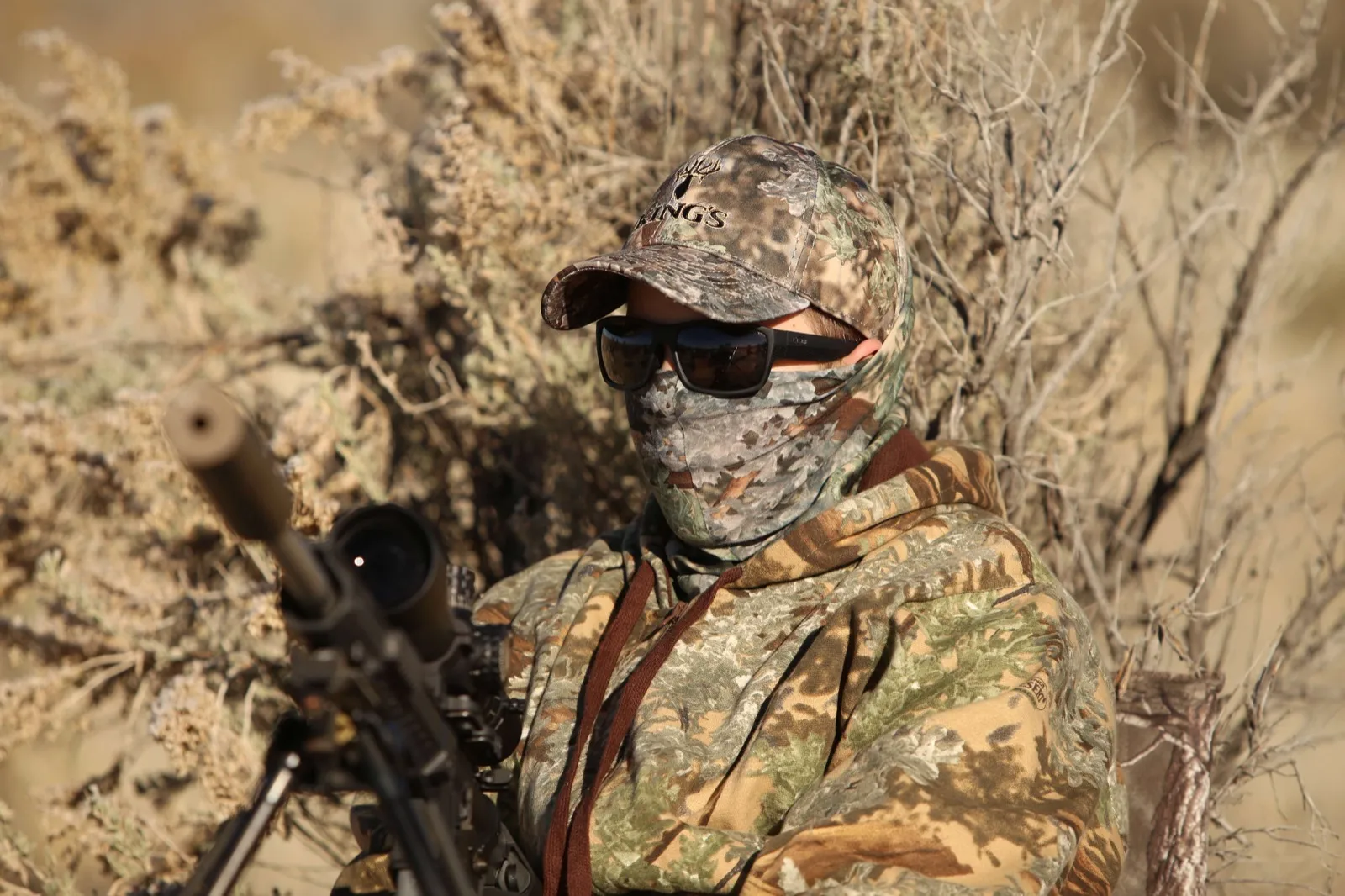
Binoculars are not required — most predators come inside 100 yards, and I prefer to scan without magnification. A camera isn’t necessary either; on guided hunts every image was provided at the end, and most cell phones are more than adequate anyway.
There is more detail on all of it in the coyote hunting gear list and the rifle comparison.
What clients said
I did a three day two night guided hunt with Chad. Even though it was a slower time to call per my understanding, we still got a lot of action and opportunity. This was an experience rather than just a hunt.
Chad spent as much time as I wanted explaining and teaching, which is ultimately what I wanted. Not only did I learn coyote hunting basics, it transferred to big game and dramatically improved my skills. I would recommend at least two days to maximize opportunities and gain foundational knowledge.
Brady K
I’ve been calling predators for a few years. I harvest “my fair share”… or so I thought. Being what I considered a casual but reasonably experienced coyote hunter, I thought I had techniques fairly well figured out — wind, sun, calls to use, positioning.
I brought my son, who was 13 at the time, and we had an amazing time. Not used to seeing a lot of coyote activity, I was literally stunned by stand after stand watching coyotes come to the call. Nearly every stand produced, and stands I never would have thought of trying. It wasn’t dumb luck — Chad truly understands where coyotes live, what provokes them or piques their curiosity, how to hide in plain sight, and how to get them close. I now call him the Coyote Whisperer.
Hunting with him is so much more than just calling coyotes in. He explains why he chose each setup, where he expects the coyotes to come from, what mouth or electronic calls to use, and more. It’s a complete course on how to be a better hunter.
Eric H
About your guide
Chad C. is the owner and operator of Coyote Hunting 101. He started calling coyotes at the age of 12 — unsuccessfully at first — and has spent years since becoming a polished coyote caller. He enjoys calling coyotes more than any other pursuit in life, and licensed predator hunting guides in the family also guided for gray fox and bobcat where permitted.
The reason for guiding was the same reason this site exists: there is nothing more fun than helping someone else get better at this. That part hasn’t stopped. Everything that used to be taught on stand is now written down across the guides, and anything not covered there is a fair question to send in.