
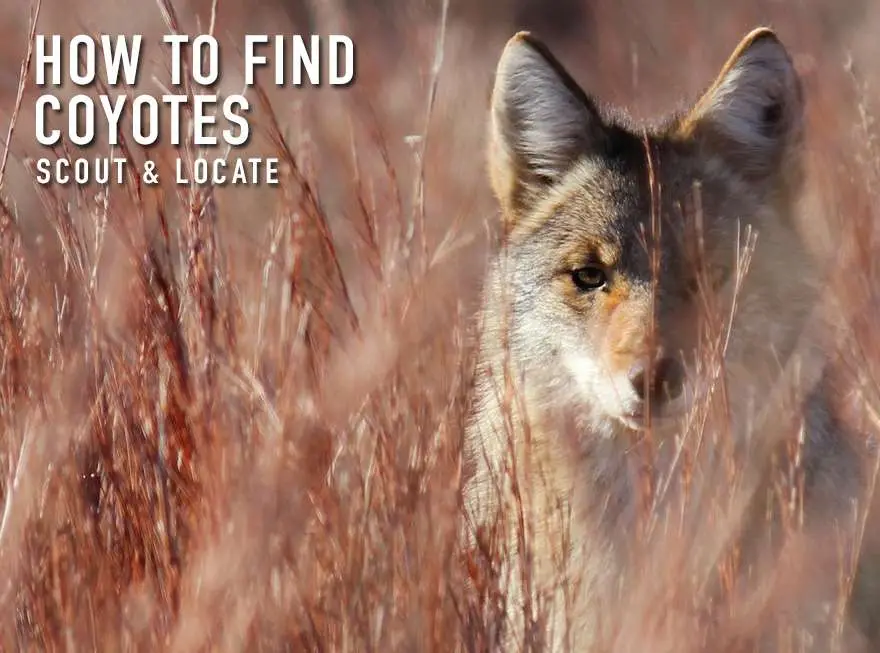
Everything else in this series assumes you are set up somewhere a coyote actually lives. That assumption is where most blank stands come from.
Scouting is the least glamorous part of predator hunting and the part that decides your season. You can own the best call on the market and shoot better than anyone in your county, and none of it matters on ground that does not hold dogs. What follows is how I pick where to go — some of it from a screen, most of it from a truck window, and the rest from what is on the dirt when I get out.
Two things to settle before you burn a tank of fuel. Check what your state allows on the ground you are looking at, because access, legal hours and what you may scout from vary more than people expect; the state regulations have it state by state. And be honest about what you can carry in, because the gear you run decides how far off the road you can realistically work a stand.
Ground holds dogs because it feeds them. Work out what the coyotes in your country are eating in the month you are hunting and you have narrowed the map before you leave the house. What coyotes eat, by region and by season goes through it. In the West, what coyote prey eats, and where that puts them reads the same question off the plants, the eastern half of the country gets the same treatment, and transition areas explains why coyotes hunt the seam.
These are a few of the ways I find country worth hunting. It is not an exhaustive list and it is not meant to be: it is the shortlist I actually run through before I mark a new stand.
Everything here feeds the next part. Ground that holds dogs is what makes a stand worth setting, and no amount of good calling rescues a stand on empty country.
Before you scroll: these tips took a lot of blank stands to learn. I send the new ones out as I find them — get them by email, a few times a season, nothing else.
Part 3 of 6
The tips, 19 to 30
Tip 19: Location, location, location
Get out there and scout your potential hunting areas. You can’t kill a coyote if they don’t live where you’re hunting. If you aren’t seeing tracks or scat, odds are you won’t have much luck. Move on to new areas, and do your best to pick up private ground by speaking politely with ranchers and other land owners. Don’t be upset if they don’t allow it, just move on to the next place. Ask Ranchers where they’ve been hearing them, they’ll know where it’s all at.Further reading
Tip 20: Online scouting
My greatest tool for scouting is Google Earth. Download it for free: Google Earth. You can use this to find places you can’t see from the road. Find water holes, ravines, tree groupings etc… Here is a great video by Lance Benson of Bucking the Odds.Coyote Hunting with Google Earth, by Lance Benson Tip 21: Private ground
Help us all out and don’t hunt on private property unless you have permission. Take the time to contact the land owner, in person, if you can. Let them know you’re intentions and ask politely. If they decline, be nice and say thank you. You never know, they might change their mind based on your behavior. Be willing to help out too, fix a fence or report problems you see on the land.Tip 22: County recorder
Check online to see if your county has a digital county GIS. The county I live in does: Washington County’s GIS maps. You can go to the county offices and get land owner information and use it to contact owners of potential hunting ground. Again be courteous!Tip 23: Locating
Were not talking about howling on stand. Getting up really early in the morning and going to possible stand locations. You can use a siren sound, or howl to elicit a reaction from nearby coyotes. Competition callers win by locating coyotes! Not recommended for urban coyotes however. an inexpensive howler to throw in the truck for locating while scouting.Further reading
Tip 24: Habitat
Coyotes adjust their hunting style to what foods are available. When they hunt small prey alone, they usually stalk it and then pounce. If the prey is larger like a deer, they will often hunt in small packs and work together to kill the prey. Coyotes are known for how well they adapt to different habitats. They can even be found living in and around large cities. In the Desert, coyotes can be found in all habitats from desert scrub, grasslands, foothills as well as in populated neighborhoods.Tip 25: Cow town
Coyotes often live and hunt around cattle. They occasionally try to pick off a calf, but they benefit greatly from livestock. When hungry they’ll even be seen eating a cowpie! They like to hunt for mice and rodents amongst the fields usually covered by cows. Don’t overlook areas with cattle, but make sure you are safe, don’t shoot towards a cow!
Cow and Coyote, by Aidan Morgan on Flickr Further reading
Tip 26: Oh deer
Some hunters are incessant about following the deer herd, and finding coyotes. Coyotes do tend to be found around the deer. However it’s not always the case, I called in a double one time in late December at approximately 7500 feet. The deer were much lower, yet these two coyotes were finding plenty to eat even at this high elevation in the winter. If you don’t think a pair of coyotes can’t take out a deer, watch the video below.Coyotes taking a whitetail buck Tip 27: Water holes
Animals flourish when there is water. Coyotes need water to survive like any other animal. It would be wise to find the water sources in your area and scout it out. I plan stands all day long based around water sources. I mark them on Google Earth, then scout them, then hunt them. Good Trail Cameras are effective tools for checking the activity around water holes.Tip 28: Scat and tracks
One of the first things I learned about blank stands was the fact that I was not finding scat or fresh tracks around the area. While driving into your areas you need to be on the lookout for fresh scat and tracks. Old scat will be dry and usually start to turn white. Fresh scat is usually darker, and occasionally has flies on it (that’s a real good sign). You need to become familiar with coyote tracks. they are distinct, and appear to be narrower than a domestic dog. Canine tracks show indents from claws, cat tracks don’t show signs of claws because they retract. Little things like this will let you know if you’re near a coyote, a dog, a fox, or a bobcat.Tip 29: Cover
Coyotes are defensive drivers. In other words, they are always leery of their surroundings. They pay close attention to anomilies in the area, and they usually seek to protect themselves before piling in on your caller and decoy. They tend to prefer areas with cover to protect themselves from potential danger. Videos can be deceiving, they often show a coyote out in the wide open. Coyotes aren’t prone to do this, however they often will cross an opening if it means a free meal. The videos you see might represent one out of three coyotes actually called. It might take 8-10 stands to get the video "just right" for TV. It ain’t just whack em’ and stack em’ like you might think!Tip 30: Agricultural fields
This one should be fairly obvious. Any time a coyote can get an easy free meal, they will do it. Hunting near agricultural fields can produce like no other, pun intended. Farmers usually know where they are having problems and a good contact can put you on coyotes in a moments notice.
From the field
Questions and answers from hunters over the years. Comments are closed; contact me if you spot something out of date.
Gary J. ·
I’m new to hunting coyotes but found out fast I have passion for it just like hunting whitetail deer I live in and hunt in grant county wv so any help to find these predators will be very helpful thank you.
Ed ·
Looking to hunt coyote in the south shore area of massachusetts i am a beginer for coyote hunting
Mark P. ·
I’m a beginner Yote hunter. My friend and landowner I hunt deer on really is grateful to take these predator’s out. He also has livestock of various types. So any advice is welcome. Northern central Ohio. 30 Minutes from Lake Erie.
yotestearcherwva ·
Hey fellow mountaineer I live in Randolph County here is the best piece of advice I can give for hunting yote while deer season ends find carcasses gut piles what ever along bedding areas preferably around edge of fields thickets set up a visual for them to see so it will take alittle stress off them set your caller up in a relatively close distance from your visual now go as far as you can from your set up that you feel comfortable shooting from and pop a squat you might be there a while so maybe bring a turkey blind or even a pop up just be patient from early spring to spring these nasty critters hunt deer bedding areas so if you feel that you have put in more time in one spot that you are willing to give it stop thinking treat it like spring gobbler season is in before you go moveing your hole set up move your blind again to a spot you feel comfortable shooting from and try it again be what I call a lazy aggressive hunter work the place out try it it works well at least in Randolph and Barbour Countys it does good luck