
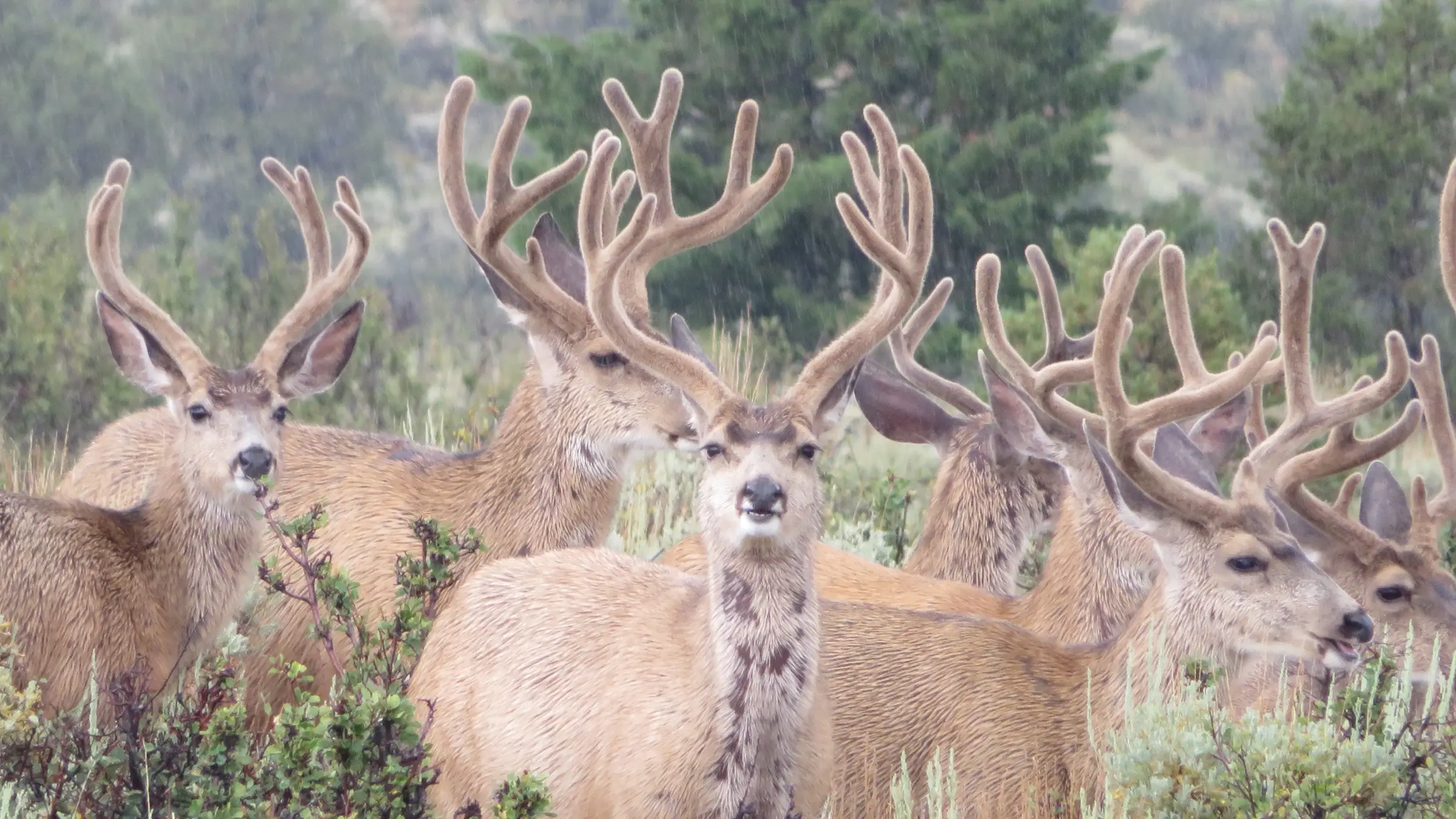
On October 29, 2026, the Utah DNR’s Division of Law Enforcement announced that its officers had “recently cited multiple individuals for illegally possessing and using thermal optics while hunting big game animals,” and seized thermals and illegally taken animals along with them.1 It didn’t say how many, where, or what species.
None of that is new law. The rule has been on the books since 2022 and took its current form in 2024. But it’s written against possessing a thermal, not just using one, and it runs from July 31 to December 31, the same months a lot of us are out calling coyotes. If you hunt predators in Utah and own a thermal, this is the rule to understand.
The short version: a thermal is legal for coyotes in Utah during the day, and at night where your county allows night hunting. It is illegal to have one with you while you’re hunting or looking for deer, elk or any other big game between July 31 and December 31. The trouble starts when those two overlap.
Utah is the second entry in Thermal in the West, a state-by-state look at thermal laws for coyote hunters. The thermal law map has every state on one page.
What the rule says
The rule is in Utah’s big game regulations, R657-5. Two parts matter.
The prohibition: “A person may not possess any night vision device, or a device capable of night vision, while taking, locating, or attempting to locate any big game animal between July 31 and December 31.”2 The 2026 Big Game Field Regulations guidebook says the same thing in plainer words on page 36.3
The definition: a “night vision device” is any device that enhances visible or non-visible light, “including night vision, thermal imaging, infrared imaging, or electronics that enhance the visible or non-visible light spectrum.”4 Trail cameras are carved out by name.4
Three things in that wording do the work:
- “Possess.” The 2024 change replaced “use” with “possess” on purpose.5 A thermal in your pack is the violation. You don’t have to be looking through it.
- “Locating, or attempting to locate.” Scouting counts. So does glassing a hillside before the hunt and helping a buddy find his animal.
- “Any big game animal.” In Utah that’s deer, elk, pronghorn, moose, bighorn sheep, mountain goat and bison.
Coyotes aren’t big game. They’re not protected wildlife at all under Utah law,6 and no Utah rule bans thermal for hunting them. The DWR’s own furbearer guidebook flags the overlap, though: if you’re hunting furbearers and also hold a big game permit, “please be aware of this restriction.”7
Where coyote hunters get caught
The rule doesn’t reach a coyote-only hunt. It reaches you the moment the hunt is about big game too, and in the fall in Utah those two are hard to separate.
You’re holding a deer or elk tag. If you’re in the field during your hunt with a tag in your pocket, you’re hunting big game, and the thermal you’d carry for a coyote is now a thermal on a big-game hunt. Calling coyotes in the morning and hunting your buck in the afternoon on the same outing is the classic way to get there.
You’re in deer country in October with a rifle and a thermal. Through a thermal, a doe on a hillside shows up just like a coyote does. An officer who finds you scanning a basin full of mule deer during the rifle hunt has to decide what you were looking for. When the DNR’s law enforcement briefed the Wildlife Board in January, the message was that simple possession of a thermal during that window is illegal, and that a hunter’s partner spotting with one counts as hunting too.8
You’re helping someone else. A friend with a tag asks you to bring your thermal and help find his elk, or find the one he hit at last light. That’s locating big game with a night vision device, and the possession is yours.
After dark, the light rule adds to it. Utah treats a spotlight or other artificial light in places where protected wildlife are generally found as probable cause that you’re trying to locate them.9 That rule is written about lights, not thermals. But in Utah deer are generally found nearly everywhere, which is why night coyote hunting there runs through county ordinances (below).
What the board heard in January also cuts the other way: a thermal sitting in the truck isn’t treated the same as one carried in the field while hunting.8
Thermal at night
Utah rewrote its night hunting law in May 2025. The statute now defines a “light enhancement device” as including “a spotlight, thermal vision, and night vision,”6 and allows night hunting of nonprotected wildlife only “when allowed by a county ordinance.”10 So after dark, a thermal is treated exactly like a lamp: legal where your county has an ordinance and you follow its terms, illegal where it doesn’t.
Seven counties are confirmed to allow it with a permit, and several of them close night hunting over the deer hunt. The county list, the permit fees and the questions to ask the sheriff are on the Utah coyote hunting page.
Someone protecting their own crops or livestock from predators, or their agent, is outside the county requirement.10 That’s a depredation exception, not a recreational one.
Hunters who got caught
Utah hasn’t released names, locations or outcomes from this fall’s citations, and we found no Utah thermal case reported by name in the news. The DNR did tell the Wildlife Board in January that thermal use is concentrated in the limited-entry units, and asked the public for photos, video, GPS points and license plates when they see it.8
Neighboring states have published theirs, and they show how these cases go.
- Oregon, October 2025: cited in daylight, nothing killed. At 11:28 a.m. during the general rifle buck season near Sweet Home, an Oregon State Police officer contacted a hunter about a thermal. He admitted using it, was cited for hunting, locating or scouting with a thermal device, and had his rifle seized.11 Oregon bans thermal for hunting all year, but the case is the closest thing on record to Utah’s possession rule: no animal, no night, and still a citation and a lost rifle.
- Oregon, December 2024: thirteen arrests in two days. After two years of complaints, OSP troopers served nine search warrants in Clackamas County, arrested 13 people and seized 14 thermal devices, a rifle and four deer. Troopers also cited three more hunters they found using thermals in the field during the investigation.12 13
- Wyoming, January 2024: more than $137,000 and up to 27 years. Three men used thermal rifle scopes and spotlights to kill mule deer and elk at night in Campbell and Johnson counties. Their pleas came to more than $137,000 in fines and restitution, 30 to 60 days in jail each, and the loss of hunting, fishing and trapping privileges for 20, 23 and 27 years.14
- Arkansas, December 2022: the scope kept the evidence. A hunter stopped near a national wildlife refuge had a suppressed rifle with a thermal scope. Its memory card held 57 videos and images of night hunting, and the investigation tied him to as many as 22 deer. He paid $15,000 in fines, forfeited his rifles and optics, and drew a seven-year suspension honored across the Interstate Wildlife Violator Compact.15
- Louisiana, December 2024: the thermal was its own charge. A hunter seen shooting a buck from his stand after legal hours admitted taking ten antlered deer over two seasons, seven of them at night with a thermal-scoped crossbow. Possessing a crossbow fitted with a thermal scope was one of the charges, and he faces up to $17,427 in civil restitution.16
Two lessons carry over to Utah. Officers are working these cases on purpose now, with tips, warrants and patrols. And many thermal scopes record by default, so the device that got you cited can also hold the evidence.
Penalties
The charge depends on what you’re caught doing. Utah’s code makes breaking a Wildlife Board rule an infraction on its own and breaking the wildlife statute a Class B misdemeanor.17 The DNR’s announcement puts these cases at a Class B misdemeanor and up.1
If an animal is killed, it can become a felony. Wanton destruction of protected wildlife is a third-degree felony when the animal is a trophy or the total value tops 500 points (a deer counts 400 and an elk 750).18 A trophy buck deer is 24 inches or wider outside; a trophy bull elk has six points on at least one side.6
Restitution has a floor, not a ceiling. The DNR’s post says restitution can reach $12,000 for trophy animals and up to $45,000 for some once-in-a-lifetime species.1 The statute sets those as minimums: at least $12,000 for a trophy deer or elk, $45,000 for a bighorn sheep, $9,000 for a moose, mountain goat or bison, and $3,000 for a pronghorn.19
You can lose your hunting privileges, in more states than Utah. A suspension can run up to seven years for a felony, five for a Class A misdemeanor and three for a Class B, and it can be doubled for a trophy animal.20 Utah belongs to the Interstate Wildlife Violator Compact, so member states honor each other’s suspensions.21
Your gear goes too. The thermal, and often the rifle, are seized as evidence, as in every case above.
How to stay legal
- Daytime coyote hunting with a thermal is legal in Utah, as long as you aren’t also hunting or locating big game.
- Keep coyote outings and big-game outings separate from July 31 to December 31. If you’re carrying a big game tag that day and hunting it, leave the thermal at home.
- Don’t use a thermal to help anyone find big game, including a wounded animal, in that window.
- At night, confirm your county first. A thermal after dark is legal only under a county ordinance, usually with a permit, and several counties close over the deer hunt. Start with the county list.
- Carry what makes a predator hunt look like one: a call, a coyote setup, a rifle that fits the game. It won’t change the rule, but it helps an officer read the situation.
- Trail cameras aren’t night vision devices under this rule,4 but they have their own season limits. The Utah page covers them.
- Assume a thermal scope records. Check what yours saves before you need to.
Why the internet disagrees
Search this and you’ll find three different rules, and a few gear sellers’ charts that still call Utah “legal statewide.” The rule changed twice:
- March 2022: the board banned using a night vision device from 48 hours before any big game hunt in the area through 48 hours after it.22
- July 2023: a fixed window replaced that, using one from July 31 to January 31.22
- July 2024: “use” became “possess,” and the end date moved to December 31 to match the trail camera season.5 That’s the rule today.
If what you’re reading mentions 48 hours or January 31, it’s out of date.
My take
I don’t defend anyone running a thermal on a deer hunt. In Utah’s limited-entry units, where a tag can take twenty years to draw, it’s the worst kind of cheating, and the people doing it make it harder for the rest of us to keep the tool for coyotes.
But a possession rule puts lawful coyote hunters inside the same net. If you hunt predators in deer country in the fall, keep the outings separate and know your county’s rules, and you’ll never have to explain yourself.
If you hunt Utah, add your voice below. Tell me how this rule changes the way you hunt.
For the rest of the West, the thermal law map has every state, and Nevada’s proposed seasonal thermal ban is the one to watch next door. If you’re still choosing a scope, here are the thermals I’d buy.
Footnotes
-
Utah DNR Division of Law Enforcement, “Thermal Optics & Night-Vision Enforcement,” Facebook post, 29 October 2026; reported by ABC4 — “Night-vision” devices are prohibited during hunting season, 29 October 2026 News report — 29 October 2026 ↩ ↩2 ↩3
-
Utah Admin. Code R657-5-7(4)(a) — Prohibited Weapons and Devices, current version effective 22 October 2025 Administrative rule — no printed page ↩
-
DWR — 2026 Utah Big Game Field Regulations Printed page 36; also pp. 5 and 48 ↩
-
Utah Admin. Code R657-5-2(2)(p) — definition of “night vision device” Administrative rule — no printed page ↩ ↩2 ↩3
-
DWR — 2024 Utah Big Game Field Regulations, “Changes for 2024” Printed page 3 ↩ ↩2
-
Utah Code § 23A-1-101 — definitions: “light enhancement device,” nonprotected wildlife, trophy animal Statute — no printed page ↩ ↩2 ↩3
-
DWR — 2026 Utah Black Bear, Cougar and Furbearer Guidebook Printed page 43 ↩
-
Utah Wildlife Board — 8 January 2026 meeting, item 5, Law Enforcement update on drones and thermal use Meeting recording, 05:58–17:25; approved minutes in the 30 April 2026 board packet, p. 8 ↩ ↩2 ↩3
-
Utah Admin. Code R657-5-13(1)(b) — spotlighting as probable cause Administrative rule — no printed page ↩
-
Utah Code § 23A-1-204 — Night hunting of nonprotected wildlife, county ordinances Statute — no printed page ↩ ↩2
-
The New Era (Sweet Home) — OSP reports recent wildlife cases, 28 October 2025 News report — 28 October 2025 ↩
-
ODFW — Troopers turn up the heat to catch thermal imaging poaching, 23 December 2024 Agency news release — 23 December 2024 ↩
-
OPB — Oregon cracks down on hunters using thermal imaging cameras, 18 March 2025 News report — 18 March 2025 ↩
-
Wyoming Game and Fish Department — Plea agreements reached in Campbell and Johnson County poaching cases, 12 January 2024 Agency news release — 12 January 2024 ↩
-
Arkansas Game and Fish Commission — Night hunter’s poaching results in seven-year suspension, 21 December 2022 Agency news release — 21 December 2022 ↩
-
Louisiana Department of Wildlife and Fisheries — Agents cite subject for multiple deer hunting violations in LaSalle Parish, 23 December 2024 Agency news release — 23 December 2024 ↩
-
Utah Code § 23A-5-301 — Violation of title or rule, penalties Statute — no printed page ↩
-
Utah Code § 23A-5-311 — Wanton destruction of protected wildlife Statute — no printed page ↩
-
Utah Code § 23A-5-312(4)(b) — minimum restitution for trophy animals, effective 6 May 2026 Statute — no printed page ↩
-
Utah Code § 23A-4-1106 — suspension of hunting privileges Statute — no printed page ↩
-
Utah Code § 23A-2-505 — Interstate Wildlife Violator Compact, recognition of suspensions Statute — no printed page ↩
-
Utah Admin. Code R657-5 — rule versions effective 14 March 2022 and 11 July 2023, compared on adminrules.utah.gov Rule history — archived versions ↩ ↩2